Steve and the Astro Dollies

LOL… OK Astro Dollies is a name some of us active women HAA observers and astrophotographers like to call ourselves. For the record I didn’t come up with it.

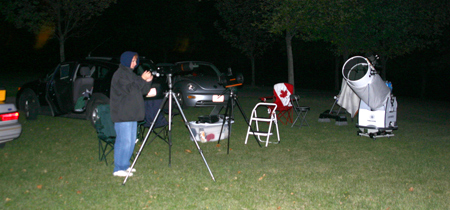
Last night after having a nice quick dinner at Tim Hortons/Wendys, Jackie, Steve and I headed for Binbrook. We were greeted with beautiful clear skies to the south and only a few big patches of cloud to the north (probably over Hamilton city). We set up at 9pm and started observing right away. I opted to put my 6in SCT on the camera tripod since I have been a little burned out from setting up the portable astro office. We hunted down many DSOs and spent some time looking for the Stephens Quintet. We found ngc7331 easily but had a difficult time finding the nearby magnifincent five. We thought that we might have found them in Steves scope but it could have been our averted imagination playing tricks on us. We should be able to see them in a 12 or even 16 in scope but perhaps we weren’t looking in the correct position. Near midnight Jackie and I were starting to feel the cold and we wanted to pack it up a little earlier than planned. Steve wanted us to all wait around for m41 to rise so that he could continue his messier marathon in order…. we had to tell him no way are we waiting till past 4am. So he reluctantly started to pack up as well. Sorry Steve. Well I think 3 to 4 hours of observing is not bad at all. Tonight I’m sure they’ll be out for a much longer time. I won’t be able to join in though.

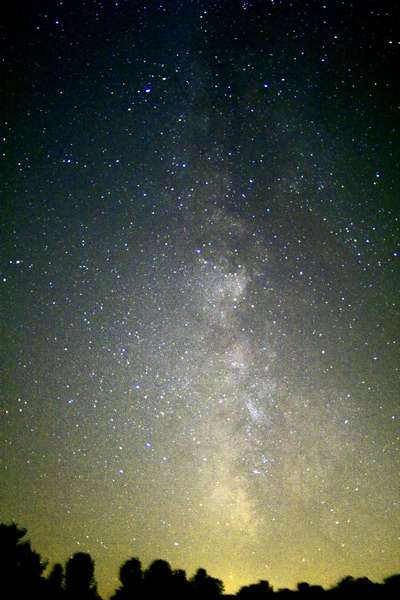
Below is my feeble attempt at the milkyway from early last night. About 6 x 30 second exposures taken with my 18mm lens on the Canon 300D. I used a small $15 table top tripod (I bought off of Tim H) for stability.
By KerryLH

Oh ya I almost forgot to add that Steve was nice enough to let me check out his Sky Quality Meter. Binbrook was about 20.16 and on my drive home it ranged from 16 to 20…. and at home in Grimsby I measured 20.06 overhead/south, but a poorer quality (but still not too bad) 19.47 to the north. THe SQM is a cool gadget. I would love to see how it ranges on different clear nights with varying seeing and transparencies. Apparently last night the CSC was saying seeing and transparencies were to be fairly poor quality. Didn’t seem all that bad though.

Ode to the CSC

The Clear Sky Clock (CSC) called for a few clouds till 9 PM.
So it turns out that the only clouds were centered over Hamilton, far to the north, and Binbrook Hill was pristine. The Sky Quality Meter (SQM) read 20.15 and the milky way spilled all across the zenith.
I made my way with Jackie and Kerry to our hilltop observatory.
It was nice to arrive together, since the headlights could light the setup process without trashing anyone’s night vision.
I think an improvement to the CSC would be to lift a small sub-bitmap for each cell, rather than just expanding a single pixel to fill the cell.
Then, at a glance, you could see the extend and proximity of clouds at each hour, without having to poke around.

My next Sequential Messier Marathon Object (SMMO) was M40 and although i set the Great White Scope (GWS) up dangerously close
to a spot where a tree would soon hide M40, i managed to get setup,
collimated and align the finder to the main scope with lots of time to spare.

Kerry broke the news to me that M41 does not even rise till 3.53 AM, and by then will be low behind trees, so the rest of the evening was spent trolling for other DSO’s.

While Kerry and Jackie did unguided shots of the sky with their cameras,
i pointed out that an EQ platform is effectively tracking, and can be used to support a tripod in any direction. We started conspiring to do an EQ platform clinic and make one for each participant.

I patrolled around the sky looking for things i could remember how to find… and I brought in M28, Jupiter (which required more counterweights), M34, M57 and was going to ask for a 5 mm eyepiece to try to bring out some detail in it (M57), but the GWS had stopped tracking (The battery on the EQ platform was dead)… i was able to attach the standard connector on my scope’s primary fan to power it though, so i was back up and running in a few minutes.

but soon we were off on other pursuits…

We went on a search for Stefan’s Quintet, and although a fine faint fuzzy just south of NGC7713 could be barely seen in the GWS, even i had to say ‘bring on the cameras’ because no amount of averted vision was going to help get detail on that one. (Turns out it was discovered in a 16 inch scope, so perhaps it’s worth another look, now that we know how to find it).

The counterweight issue with the GWS is starting to get more troublesome.
I need to get a new case for the water bottles as it’s getting hard to keep removing and replacing them in there.
The concept of some heavy chain is starting to sound better all the time, although it would only work if it was allowed to touch the ground, not just the EQ platform.

The Helix Nebula was seek’d and not found. The sky in the southern direction was actually rather dull, and i could not make out guide stars very well at all.

I put my XTi onto the water bottle holder and snapped a few 30s time exposures, and a single 30S Dark frame. It turned out that the BULB mode requires the finger to remain on the button till the exposure is over, which is actually a bit of a problem because the support on the scope for the camera is not strong enough to drag me along with it.

I guess i will soon be in gadget building mode again. I would like to make something which can time an exposure and a repeat rate for exposures.
Preferably without requiring an entire laptop running to do so.

One more try… M74. But it was not to be. Kerry was packing up and Jackie was soon to beat a hasty retreat, well in advance of fabled 3 am endurance records. Even before midnight there was talk of packing up. I ended up packing up at about 12:30, intent on doing some early morning set-up on Monday to bag M41-M45.

Who needs a telescope?

OK I’m sort of kidding…. but seriously, ever since getting my binoculars (15×70) I have had many enjoyable observing sessions that I often wonder why so many people overlook them when they are starting out in the hobby.

Last night after the thunderstorms passed there was a fantastic clearing. Hubby looked out and said the milky way looked the best that he has ever seen from our place. Since there was no way I was going to set up my scope to do any type of imaging. I opted instead for the fold out chair, my 15×70 binoculars and laptop (for the sky chart). I spent a little bit of time hunting down some open clusters between Cepheus and Cassiopeia. I found M52 and a few other nearby NGC clusters. M52 was pretty bright and had a bit of a nebulous look to it. I couldn’t really resolve any single stars though. Turning towards the east… Andromeda Galaxy looked great, since it was pretty high up and the air was so clear, the spiral arms took up about half of the field of view in my binoculars. I panned down and there was M33… large and faint as usual. I checked out a few more clusters including the Perseus Double Cluster and of course Pleiades (M45) twinkling ever so brightly low in the sky. A definite sign that winter is coming. After that I really wanted to see how faint I could get with the binoculars in my mag5.5 skies… so I started to hunt down NGC7331, a galaxy in Pegasus that has quite a few very small companions. It took a little while but I can definitely say that I saw it with averted vision. I double checked the stars with my astro program, along with the actual tilt/elongation relative to the other stars and it definitely met the criteria. Next on my list was a pair that I imaged last month… NGC 6946 (fireworks galaxy) and nearby open cluster NGC 693. Again after some hunting, I could see the open cluster with direct vision and the galaxy was much smaller and was only seen with averted vision. If I didn’t try to pinpoint the exact location relative to various stars, I probably wouldn’t have found them.

Just after midnight, I started to get a little chilly so I decided to pack up and head in… after 1 hr of successful observing. .

Silent lake with the GWS

I headed for Silent Lake Provinvcial Park (SLPP) as soon as my dinner banquet was over, and arrived at about 11:20 pm on Friday night; I was greeted by a wondrously dark clear sky.
The SQM reported 21.6 which is about as dark as i have ever seen it.
Since nobody else was in the parking lot, i debated setting up the Great White Scope (GWS) or going in search of the others. (They had said you cannot see the sky from the campsites, so i wondered if they even knew it was clear). The other motivation was getting my tent out of the car so i could reach the scope.

After fishing up a map from the front gate, i found my site. The roads are very bumpy and it’s a good idea to go nice and slow when there’s a GWS in the car.

Everyone had already gone to sleep, since, as i found out later, it had rained earlier in the evening.

I guess it’s a good thing i did not immediately set up the scope, because there was a patch
of rain at midnight for about 15 minutes, timed to coincide with me setting up my tent. The rain relented and the skies cleared again. I settled for some binocular observing from the campsite through my small bit of sky, till about 3 am. Unfortunately, the zenith is not a good binocular target without a binocular box, and it was a bit of a physical strain. I did eventually reel in M31 and some other bits near it.

Saturday was a busy day, including a canoe trip on the lake, piloted by Don. On our return from the canoing, i was able to pass the oars to Margaret and Bruce, who went on a dragon-boat practice to the end of the lake and back in something like 1/3 of the time Don and I had spent. (But we did both ends of the lake, so i don’t feel quite so out-classed.) Some pretty fine food followed, with Sausage on a bun with Glenn and Gail, and a yummy salad made by Margaret.

The evening observing session got underway at about 7:30 pm, with Don and i leading the charge back to the day-use parking. Apart from a quick visit by the ranger, and a swimmer, we had the whole area to ourselves.

We decided to set up down by the beach, which provided an excellent view to the southeast along the lake. Unfortunately some trees near the beach blocked access to M45 for a time.

I entertained a parade of observers with the GWS on deep sky objects, including Neptune, Uranus, and the Helix Nebula. The evening was punctuated by shooting stars.

I continued my quest for sequential messier marathon objects (SMMO’s), getting M33. The trees were not placed well and i did not get any more that evening. But that’s a good reason to explore the rest of the sky in the meantime.

At about 3 am clouds rolled in from the east and blocked most of the sky, providing an invitation to pack up and sleep. The hooting of owls along the lake was impressive.
I almost suspected it was a prankster, since instead of hooting, they called, “Hoot Hoot Hoot Hoot, Hoot-Hoot, Hoot-Hoooooooot” with the last hoot trailing off and lowering in pitch. I could hear them being answered from far away. Also the timing that i heard was not necessarily what the owls were hearing, because one was much closer to me than the other 2.

Also loons were calling on the lake. I heard all the variations of loon calls. Again, with the night air, they seemed to be very loud and carried a long way. It’s about 6 km from one end of the lake to the other.

On Sunday, i set up for a hike around the lake, but discretion was the better part of valour when i realized that my knees might not take it and I would be miles from home when it happened. The trail is rather rugged in spots. I elected to return after a time spent at the first scenic lookout, and have a swim at the beach, and an afternoon nap.

Since everyone took off by 2pm, I had the parking lot to myself in the evening. It was so dark and quiet. The SQM again read 21.6. I bid goodbye to 3 vehicles of picnickers with canoes and a snarling puppy, and a lone swimmer. We talked a while about astronomy and her experiences with family members who awaken early to see things like lunar eclipses.

While I waited for Polaris, I set up the Nextstar on a tripod and poked around the sky with it. Then I tried putting the XTi on it and picking up an image of Jupiter. Alas, i did not have good focus, and the image was pretty small, but at least the Nextstar is compatible with the XTi in terms of focal distance.

I tried some longer exposures, of terrestrial stuff. Eventually I started using the timer
on the camera so that pressing the button would not set the mount shaking.

I finally got a sighting on Polaris at about 8:00. Apart from one car that swung through the parking lot about 15 minutes later, i was alone for the rest of the evening. The passing trucks, about 1 every 10 minutes, on Hwy 28 about 2 km away were the only noise on an otherwise silent and almost windless night.

The Kendrick DG-3 was up and running, and i put on the fan on the primary, since i did not want dew to be the end of things this time. The DG-3 uses up a 9V battery in about 5 hours, depending on the weather, i guess.. It cycles to maintain the secondary just a bit above the air temperature.

My next SMMO, M34 was easy to find. After that it would be a few hours before M35 came up,
so i spent the time honing my skills with memory of the constellations, reviewing the other objects i have seen before. I found the Helix nebula from memory, after recognizing Aquarius in the sky.

I can now fish up many Messier objects from memory, and the dark skies rewarded the effort with clear detailed views: M51, M100, M81, M82. The eagle nebula, and the wild duck cluster were still up, so i found them and studied them for a while, but Saggitarius was partly obscured by trees and setting fast.

I then turned my attention to NGC objects, using those near my intended M35 part of the sky as a selection criteria. I think i will craft some hand-drawn finder charts to highlight the way i find them since i normally have to use visible stars with my red dot finder, to get close. Star hopping with the Nextstar is very difficult because there are so many more stars than in the Atlas.

Mars and Aldebaran also came up. Mars was a small red disk, but when studied, it was like it was on fire, changing shape almost constantly. I guess the seeing was not so great for objects in that direction, low on the horizon. I had no planets near the zenith to compare with.

Looking at M45 i saw lots of tiny stars with the GWS which are invisible in smaller scopes. Also some differently coloured visual doubles in the center of M45.

M35 eventually came up and rewarded me for waiting for it. It has a lot of small diamond-like stars. I was able to find M1 again. (It took a very long time the first time i looked for it, at Starfest), M36, M37 and M38 were easy to find, and M39, near the zenith, called for some acrobatics.

By then M40 was low on the northern horizon, and some clouds had rolled in from the north.
I spent maybe 20 more minutes looking at the rest of the sky, and watching for meteors, and saw about 12 of them in the evening, but none so brilliant as the ones at Starfest.

M31 was big and bright. I could definitely see detail and nebulosity extending far from the core in both directions. I decided to pack up and had partially disassembled the scope when the clouds parted showing m40, but m41 was going to be hours away and the clouds were definitely moving in.

I was packed up and back at camp by 4 am, considering sleep or packing up to go home. Sleep won, and it was just as well, since packing up the tent in the dark makes it hard to sweep off the sand on it. Awake at 11, and on my way at 12:26 pm, Monday, i was home by 3:35, including time to stop for gas, a Plaque about a ‘Dynamite Explosion’ and some reasonably heavy traffic for a while in Toronto.

It’s a fair drive to SLPP but if you know the way the roads are good and the skies are dark. Next time i will bring a better stool so the zenith will be easier to see, and hopefully my camera will be in operation so that swathes of dark sky can be captured. Also, i think i will stay one or 2 extra nights, assuming there’s no events pressing in on my time from each side like this time.

Special thanks to those who shared their meals with me. All were so yummy. It’s a wonder i can keep my figure.

Silent Starlit Lake

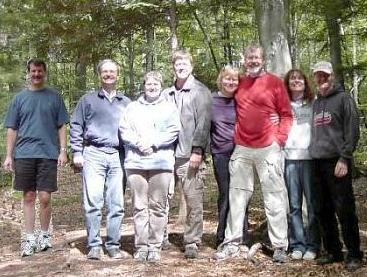
When I mentioned a few weeks ago that Gail and I were looking for company, on a camping trip to Silent Lake Provincial Park, I got four immediate takers. Stewart Attlesey, Cindy Bingham, Marg Walton and Bruce Peart all knew the park well and, by the designated weekend of September 7-9, Steve Germann and Don Pullen would also book sites.
For those not familiar with this spot, the park is located about twenty minutes south of Bancroft and, more importantly, in the middle of a large ?blue zone? on the light pollution map which means the night skies are really good.
I thought we might be pushing our luck weather-wise but, apart from gusty winds Friday afternoon and rain showers late that night, it was perfect for camping. The lake was warm enough for swimming and we would canoe, bike, fish (but not catch), and hike when we weren?t socializing at one camp or another. Friday night was warm enough to sit around in t-shirts and there were no mosquitoes.
Saturday night the temperature dropped but that only made for a perfect night of observing. Out at the day-use area, Steve and Don set up at dusk and were soon joined by the rest of us. By 9pm, the Milky Way was a broad highway of stars and we set to work collecting photons in Steve?s 16? Lightbridge, more commonly known as the ?great white scope? (GWS).
One of the first objects was M82. The folks that live in that galaxy must have been partying on Saturday night because the entire cigar shape was so bright it was as if they all had their lights on! Aperture definitely rules.
We also had good views of Uranus, Neptune, and NGC 7009 which is the Saturn Nebula – an object that exemplified the winning combination of a large mirror, premium eyepiece, and a dark sky. It would be our most modest equipment, though, that would reveal the rarest sight of the night. The Pleiades cleared the tree-line just after midnight and I turned Gail?s Starblast, a 4 ½? reflector with a 3 degree FOV, toward them. The whole asterism fit nicely in the eyepiece and after coming to a sharp focus I noticed a haze around the cluster. Being well-acquainted with the effects of dewed optics, I switched oculars. The haze remained so I pulled out my 10×50 binoculars and found that the effect was even more pronounced due to the greater contrast from the wider FOV. I called Gail, Steve, and Don over to confirm and there was no doubt; it was the famed Pleiades Nebulosity, often photographed but very elusive to the visual observer.
By the time we packed up, we?d also spotted several satellites and about a dozen bright meteors which didn?t appear to have a common radiant. We also caught a deer, in the headlights, as we drove back to our camp.
It was a great weekend and I can think of at least eight HAA members who can?t wait to go back.

HAA Picnic report

I had such a busy day today so I finally just got around to doing some image processing. So here is my late report…

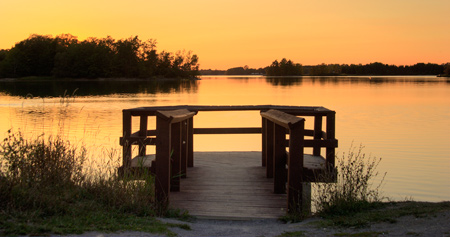
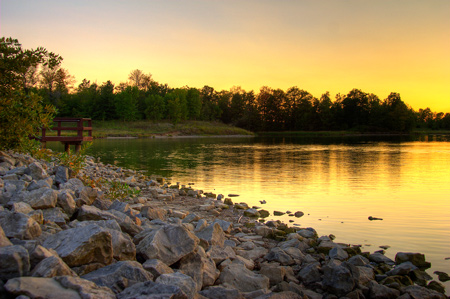
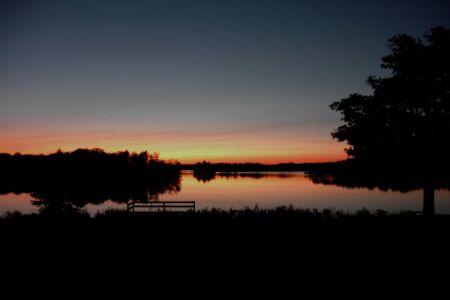
THe picnic was great and the solar system hike was a lot of fun. It was nice seeing all the members and their families. During the afternoon many scopes were set up for sun spot and solar flare viewing. As the evening wore on, the Binbrook scenery started to get very pretty.

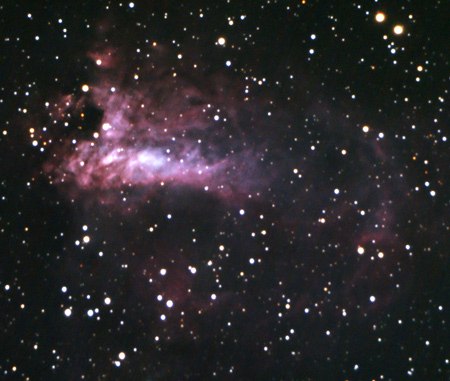
After getting my scope and AP gear set up and aligned I started to image M17 (swan/omega nebula). I never really had an interest in imaging this target but I decided to give it try anyway especially since it won’t be high in the sky for long… and really I am so happy that I did. I experimented a bit to see what the results would be like if I used the 6in SCT without the focal reducer… so I was imaging at f10 instead of f6.3. making my scope a 1500mm lens. Because of this, it made it harder to get good tracking (with DSI on the 80mm as autoguider) on the stars so I had to limit my exposures to only 2.5 min each. I collected over 1 hour of data. Because of the long focal length, M17 took up a decent portion of the frame, so I only had to do a bit of cropping. I’ll post the higher res and full frame version on my website when I get the chance.

M17 Swan/Omega Nebula

KerryLH

The south sky

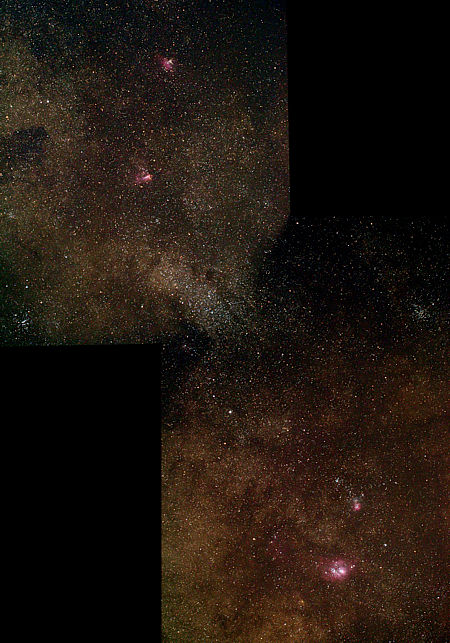
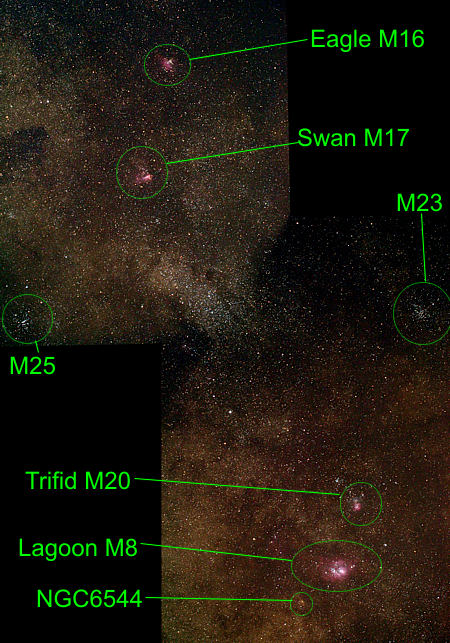
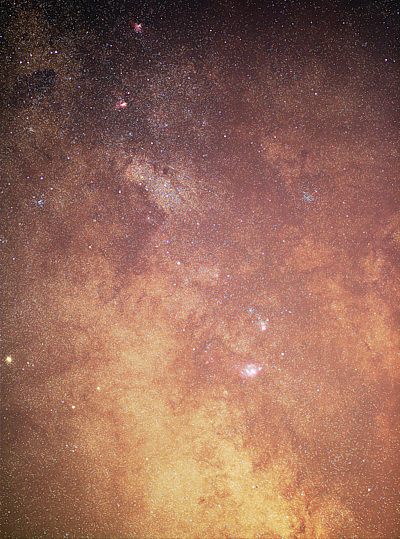
Here is a a widefield composite of the lower south sky containing the Lagoon, Trifid, Swan, and Eagle nebulae and a couple of clusters. Imaged at the HAA picnic – multiple 4 minute exposures stacked and stitched – shot at 135mm f/5 x 4 minutes each @ ISO800.

A Wonderful Day and Night at Binbrook

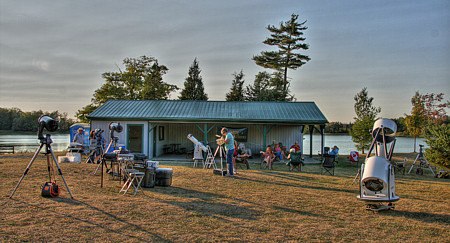
It is easy to conceive that Binbrook Conservation Area is an under-used resource when you only see it at night. That illusion was shattered, in a nice, way, when HAA members showed up on the Sunday afternoon of Labour Day Weekend for a picnic. The beautiful weather had brought families out in droves and it was fortunate that the HAA had the foresight to reserve a pavilion for the day.

Gail and I arrived about 2:30pm, left a Club cheque at the gatehouse to cover costs, then politely asked a family to vacate the afore-mentioned pavilion on which we hung the HAA banner. Turns out, though, that it was my white scope that members homed in on as they arrived shortly after.

By 4:30pm, just over a dozen of us were scanning the Sun for spots (two tiny ones) and flares (3 nice ones) after which we went on a Solar System hike. This consisted of hanging small placards, representing the Sun and planets, from tree limbs along a trail at intervals to scale with their actual distances. While the inner planets were all within 2 dozen paces Pluto was over half a mile away. It was a great way to explore areas of the park we had not previously seen. As we retraced our steps, we saw other strollers stopping to read the cards, their interest obviously piqued.

Everyone had brought a picnic supper, and some extra nibblies to share, and it was nice to see a couple from Brantford, who wished to join the Club, fit right in.

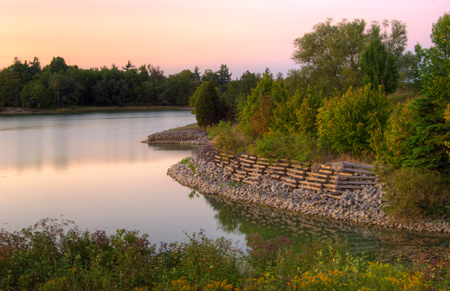
By 7pm, several more members showed up to take advantage of the exceptional conditions for observing and imaging until shortly after the Moon rose, about 11:30pm. While I only remembered my camera as the Sun set (see picture below), I hope that others will post their pictures of what was another memorable HAA event.

Update by Tim Harpur
We couldn’t have asked for a better day (and night) for the HAA picnic.

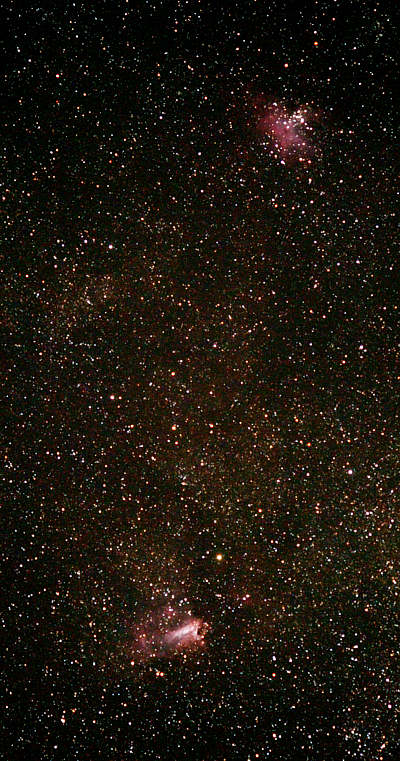
After taking a short walk through the solar system and eating – I set up for imaging through my 135-400mm telephoto APO lens. I mainly imaged wide field of the lagoon, trifid, eagle, and swan. The following image is the Eagle (top) and the Swan (lower) imaged at 168mm f/5.6 – 2 minute exposures stacked.

Friday night in Grimsby

I opted to join Glenn and Gail at their dobservatory since they are only a couple of minutes drive away, and there would only be a limited time for DSO observing before the moon rise. As always it was a very relaxing evening. I usually bring the bare bones with me in terms of gear since Glenn has a really good line up of interesting objects to view through their 6in scope. That evening, I was really impressed with the incredible sky conditions especially considering they live right in town. I was able to clearly make out the milky way through most of the evening, even as the moon was getting up to 20 deg above the horizon. We ended off the observing session with the moon, where we spent some time along the terminator.

Tonight should be another great night and since I will be going to Binbrook tomorrow, I may just opt out again tonight and set up from home on the driveway. Nothing like the comforts of home and crystal clear beautiful night skies.

Glenn’s Addendum:

Gail and I always enjoy Kerry’s company and enthusiasm for astronomy. Our sessions take the form of conversation as we “stroll” across the sky stopping occasionally to take in items of interest.
Last night we compared views of objects we had seen at Starfest noting, in particular, how light pollution can give them a different look.
One new object, that I hadn’t logged before, was open cluster NGC 6802 in Vulpecula. Not what you might call a showpiece, perhaps, but still worth a look and an item I will likely check out for comparison if the skies cooperate at Silent Lake next week.

The Lunar eclipse from Burlington

I awoke early and packed the car for the trip to Binbrook.

Then i decided to try to observe the eclipse from Burlington.
Starting at about 5 am, the moon was very bright and half obscured by
the Earth’s umbra. With my glasses on it was so bright i got double images
and a lot of glare.
As totality approached, it dimmed nicely until i could view it without
the glare. I forgot that due to the size of the earth, the umbra is large compared to the penumbra. Probably the earth’s penumbra is about as wide as the moon, considering the geometry of a solar eclipse.

I quickly constructed my tripod and put my finder-scope on it,
equipped with a zoom eyepiece. The moon was setting fast behind
the houses and trees.
I was able to view the eclipsing moon clearly as totality approached, and
even managed to snap a few time exposures with my pocket camera.
Alas it came too fast for my DSI so that’s going to have to get first light on another occasion.

I noticed Orion and the M45 overhead, and that the sky was starting to brighten for dawn.

The edge of the moon still illuminated was very bright and sharp,
but it also had a kind of shimmering nature to it, as if the
sharp edge of the moon against the sky was moving just a little,
like the surface of an ocean.
The time scale of the motions seemed to be 1-2 seconds, not the rapid
scintillation i am used to from stars.

The moon faded into low cloud just after totality, and i lost it,
but i did get a good impression of the rapid dimming towards the end.
I was surprised to note that even though it was all within the umbra, parts were still darker in the middle of the umbra. The moon lit by a circular
arc of sunsets from half the world made a nice sight.

A photo of the moon across the street, above houses, power lines and trees.

I put my pocket camera on my tripod and made this 4 second exposure near the start of totality.