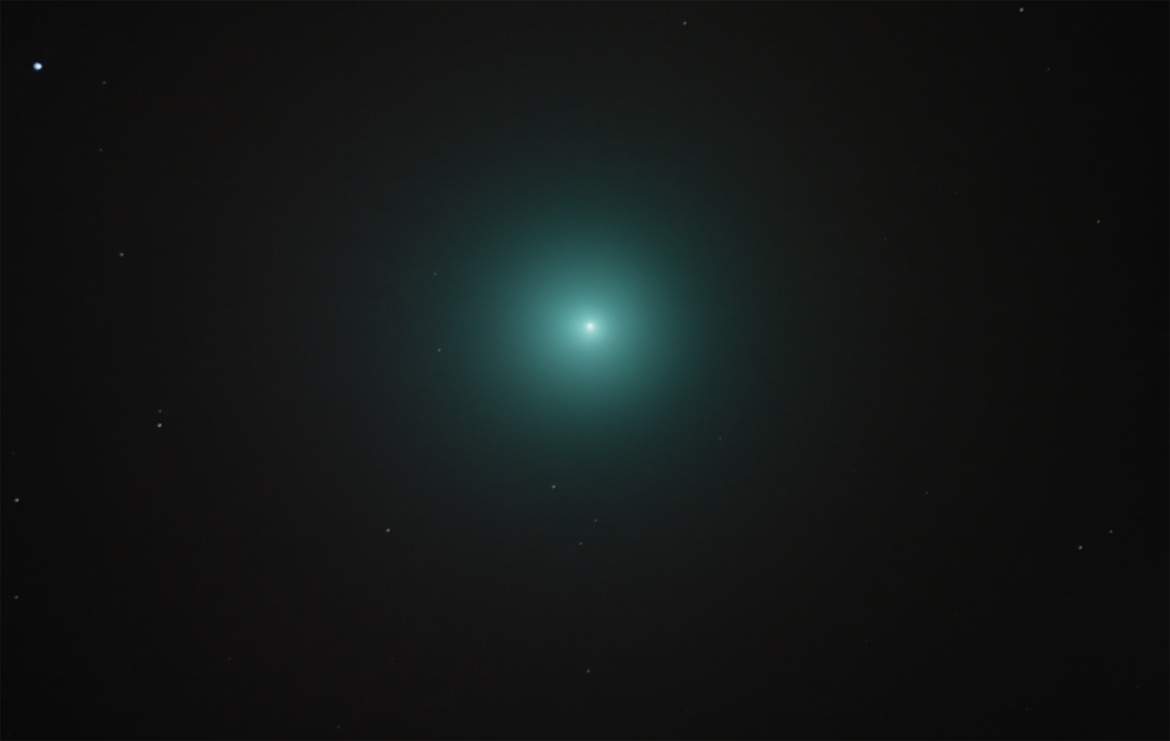
Comet Lovejoy (C/2014 Q2), by Bob Christmas

Comet C/2014 Q2 (Lovejoy) on January 13, 2015, approx. 7:30pm to 8:30pm from Caledonia ON.

I used my Canon 40D, Astronomik CLS light pollution clip-filter and my Tamron 300mm f/2.8 telephoto lens on my Super-Polaris EQ mount.

Settings: ISO 1600, f/2.8.

Post-processing included curves adjustments, colour balancing, and multiple iterations of layering, masking & blending to smooth out the head of the comet a little better.

Note the comet’s tail pointing downward as per the images’ orientation; eastward away from the sun’s direction.

The image on the left is a composite of 5 1-minute exposures and is stacked on the background stars.  The image on the right is a composite of 8 1-minute exposures stacked on the head of the comet, hence the star trailing, indicating the comet’s direction.  North is to the left in both images.

Continue Reading

Observing Comet C/2014 Q2 (Lovejoy)

With -15° degree weather astrophotography in January is not for the faint of heart! However, with so few clear nights these past few months it’s worth braving the elements for a personal encounter with comet C/2014 Q2 (Lovejoy). Lovejoy is now naked eye visible but its very faint and hard to spot unless you know exactly where to look. From my somewhat light polluted skies in Dundas the comet can be seen as a tiny, dim dot right of Orion. With a telescope the view improves and using my 8″ scope Lovejoy can be seen as a fuzzy patch but unmistakable comet. With the wonders of auto-guiding, digital photography, and stacking software more detail can be explored through the photons captured by CCD sensor.
Continue Reading

Comet Lovejoy Naked Eye

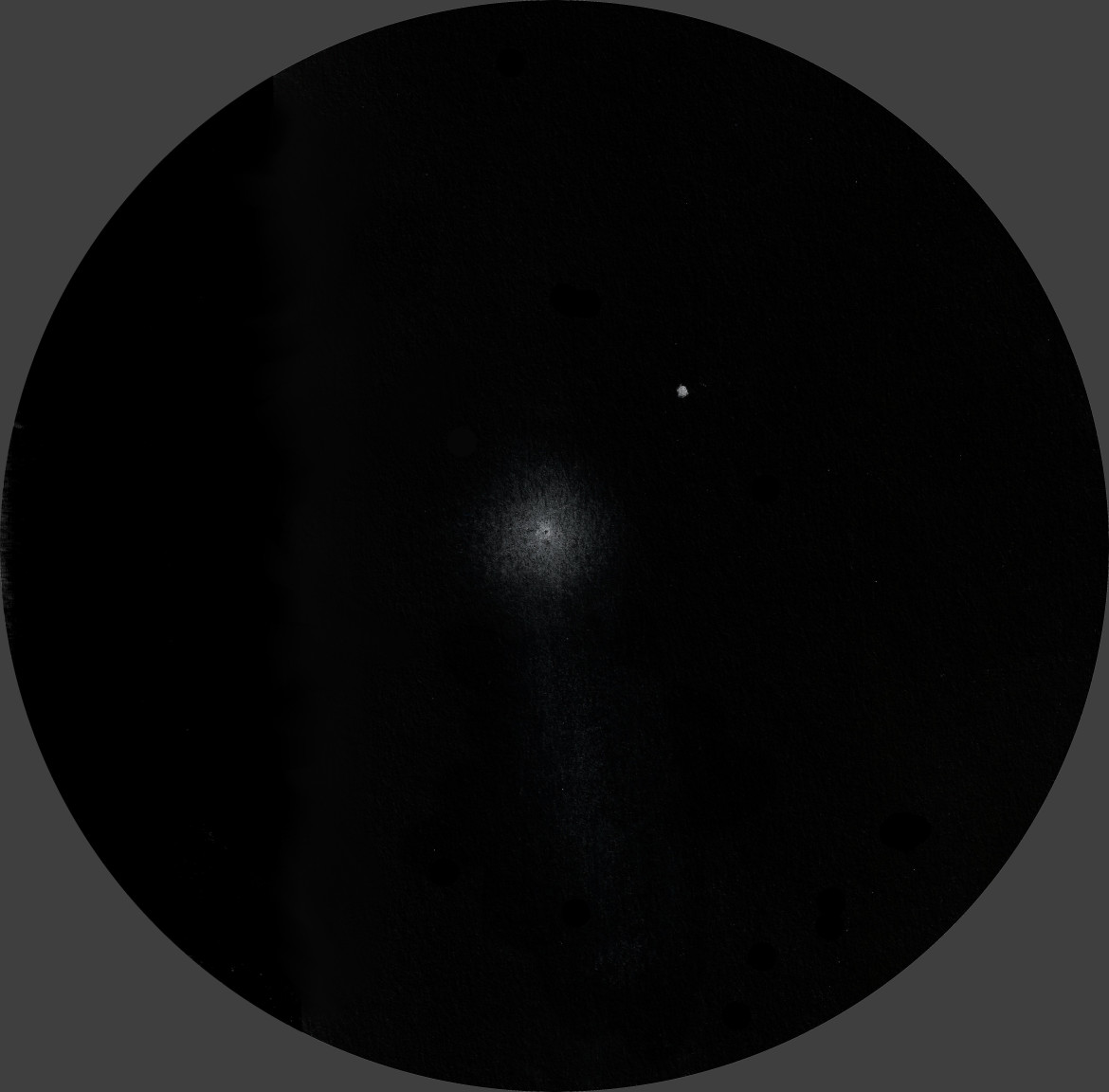
Last night finally gave some decent skies, so I ventured out into my backyard on the West Mountain to take a peek at Comet Lovejoy(even though it was -15°). The comet is now visible to the naked eye even from moderately light polluted skies, and I imagine from a dark sky site it would look fantastic. The comet is moving higher and higher into the sky, and already has dropped below magnitude +5. Through my 10″ Dobsonian, the comet was certainly a treat. The coma is quite large and fades nicely into the background sky, while the nucleus is small, stellar and bright. A hint of a tail can even be seen running east from the nucleus (although it could just be averted imagination – more observations are needed to be sure). The picture below is an inverted sketch I made of Lovejoy last night – mainly from memory and a very rough initial sketch as I wasn’t willing to sit at the eyepiece for 45 minutes drawing at that temperature. I encourage anyone who can to go outside and take a peek at the comet through their scopes and binos, and at very least try and find it with the naked eye – here is a link to Sky and Telescope giving locations and descriptions!
Continue Reading

Comet Lovejoy

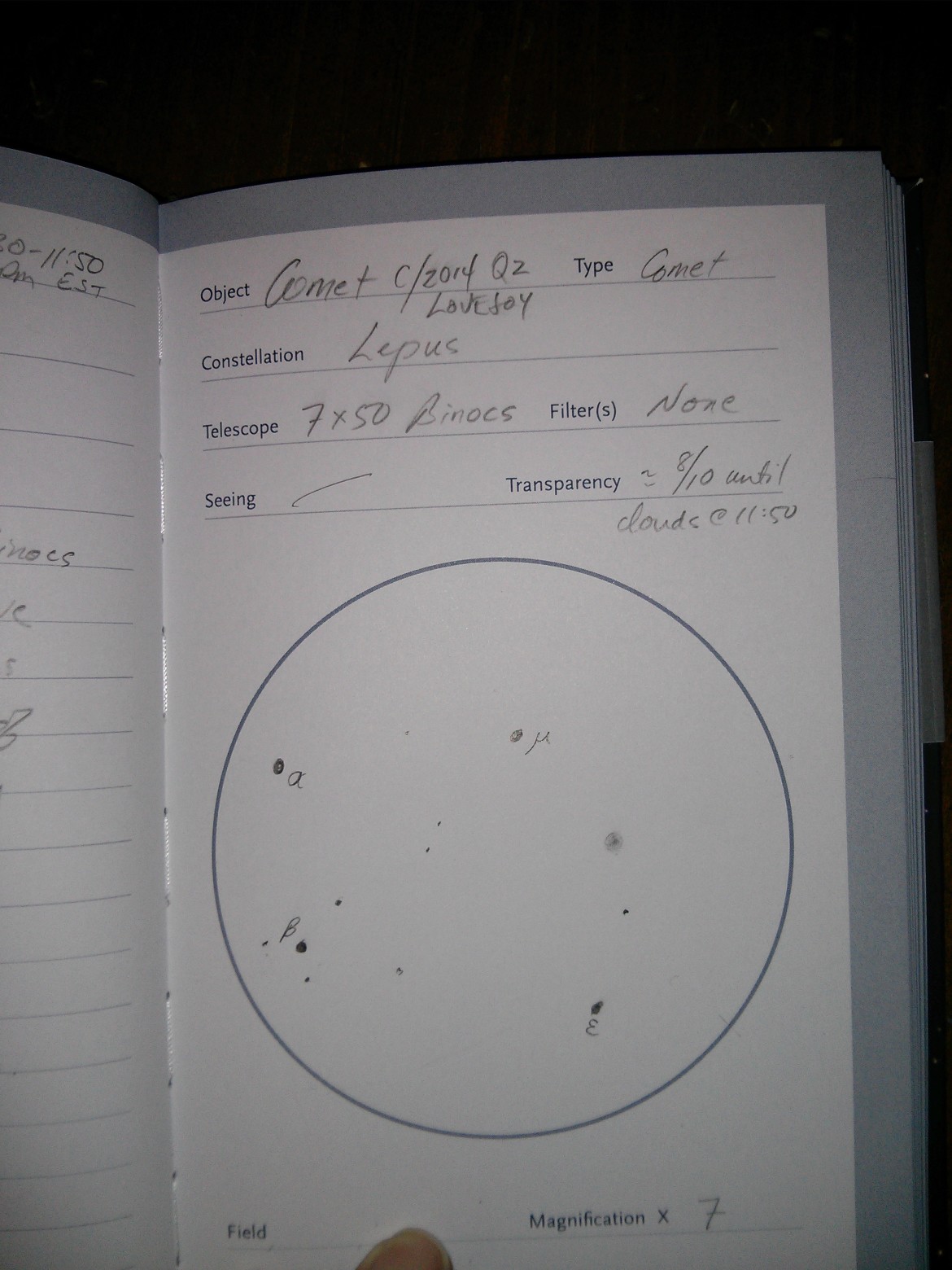
Last observation of 2014: Comet Lovejoy in Lepus. Comet appeared as a circular smudge in 7×50 binocs. No tail was visible. Comet is dimmer than magnitude 4.9

Happy New Year!

Lunar Sights

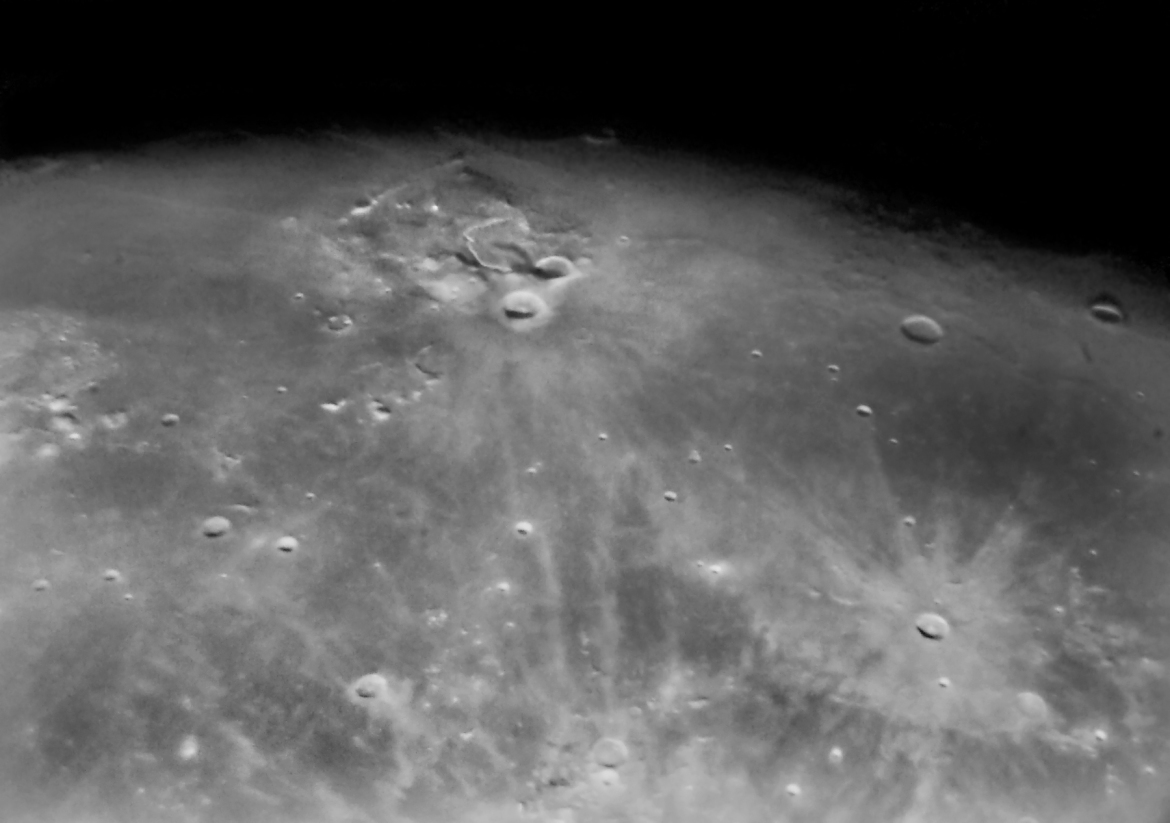
Not wanting to pass up a rare clear night, and despite the cold temperatures, I got out with my telescope and began with a below average view of the Orion nebula, due to light pollution from both the city and moon. I then went on to a spectacular view of Jupiter. The bands were detailed and the moons looked like little disks at 180x in my scope. Jupiter is always fascinating through a telescope, with the parade of constantly changing moons and the cloud bands swirling though new patterns all the time.  I am looking forward to the upcoming months when Jupiter will be better placed and visible every night.  Finally, I turned to the moon, as it was unavoidable on a night like tonight.
Continue Reading

The Waxing Gibbous Moon

Well, it’s been almost two months since I took a picture of the Moon, and you’re probably saying to yourself, “Gee, I wonder if John is feeling all right.” Not wanting you to think that there’s something wrong with me, here is a shot of the moon that I took tonight. Yup, John’s a geek and all is right in his world. Now, go outside and look at how beautiful the moon is.

Continue Reading

Sunspot Region 2192 – And Then There Were Two

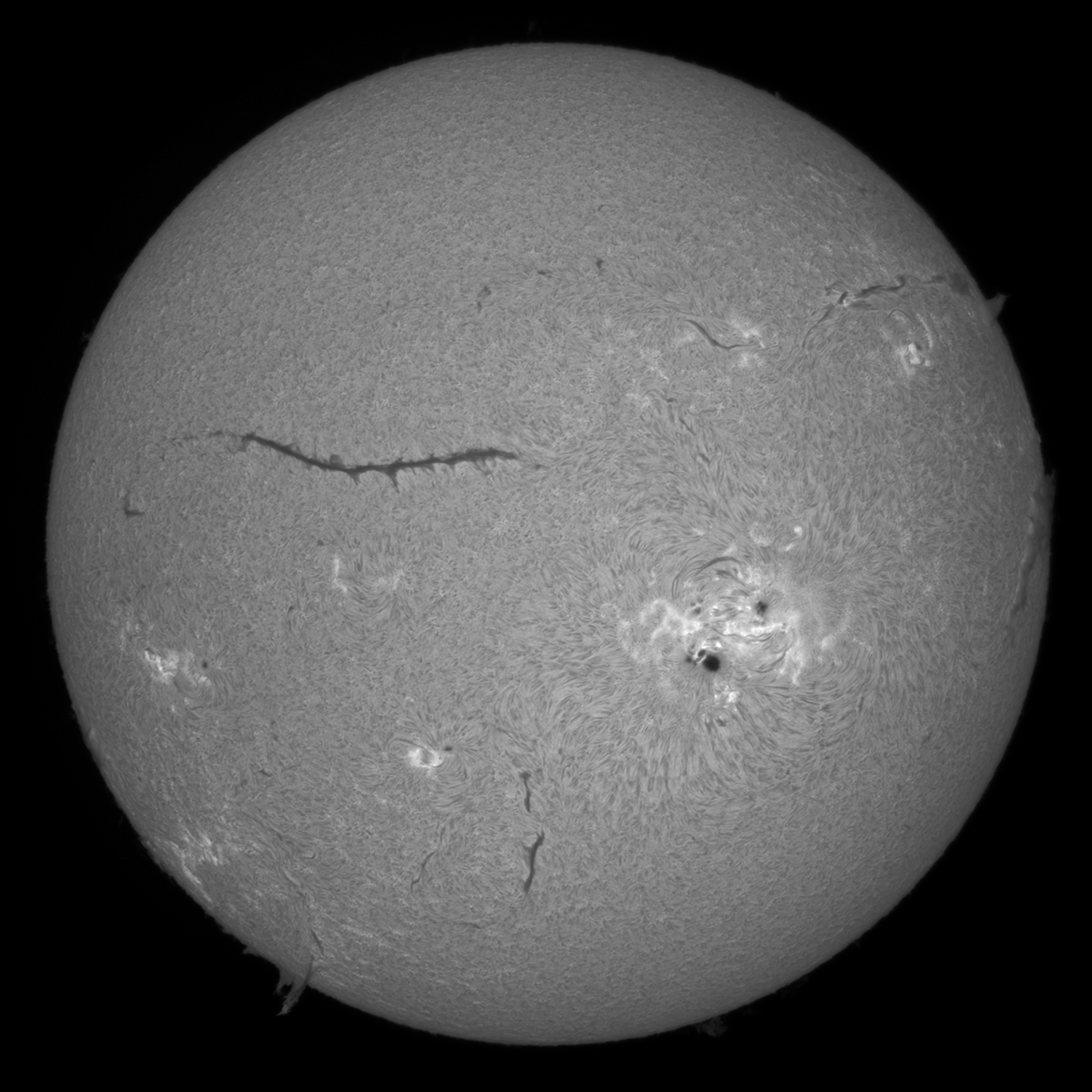
Bill imaged the Sun again today, just before an X3.1 flare was released. Sunspot Region 2192 appears to be be forming a new sunspot group. Check it out…

Continue Reading

Sunspot Region 2192 Continues to Impress

The largest sunspot region on the sun has now been dubbed the largest sunspot region of the current solar cycle. Here is a closeup view of the area from today (Wednesday, Oct. 22). Image was created by Bill Tekatch with a stack of frames from video shot with a monochrome Grasshopper 3 camera through a double stacked Lunt solar telescope.

This region should add considerable interest to images taken of tomorrow’s partial solar eclipse.

Continue Reading

Sunspot Region 2192

Today, Bill imaged the new, active, sunspot region which is just coming into view on the sun. This region was responsible for an X1.1 solar flare on Saturday, October 18. It will be interesting to watch for possible further developments as this sunspot region rotates into view.

Continue Reading

Lunar Eclipse

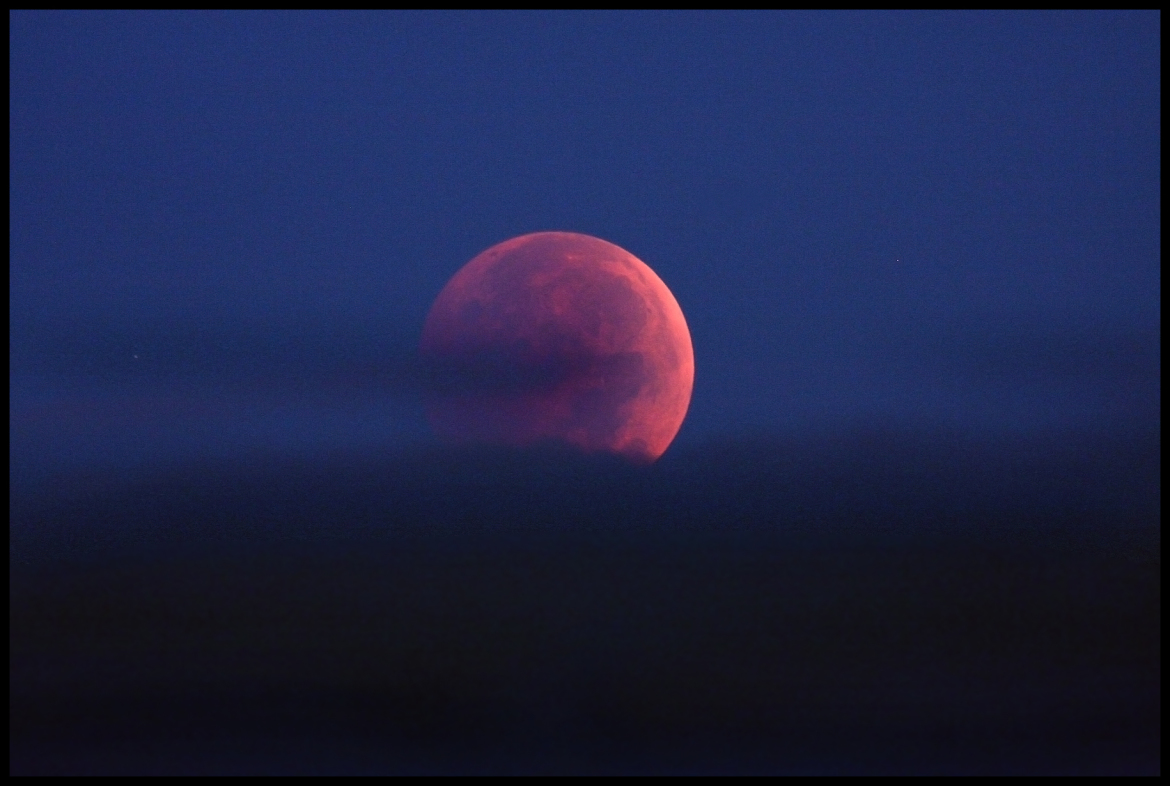
Unbelievably, the rain stopped, the sky cleared, and when I arose at 4am this morning (which was also fairly unbelievable), the moon was bright and full and headed towards the Earth’s shadow and a total eclipse.

I observed with Jim and we had some beautiful views of the eclipsed moon in the brightening sky as dawn came. The moon was red and dark this time, but part of that could have been due to it being so low in the sky.

Here are a few pics that I took. I hope you got out and enjoyed the eclipse this morning, and if you missed it, there will be another next year.

Continue Reading