Saturday proved to be a reasonably good night for viewing (relative to what we’ve had over the past many months).
Jim W, Kerry-Ann H, Tim H, Steve G, Glenn & Gail M and I set up for a mini star party to take advantage of the clear skies before the moon rose. Some of the group were real troupers. They had been down at the photography show in Toronto and a few even took a little detour to a local astro store. Others had been working or coming off nightshift, but still had the energy to come out for observing. Talk about devotion to a worthy cause!
After scoping out (pun intended) the scouts that were sharing the park this weekend, we set up over at the boat launch area to reduce the effect of their lights, and damaging the grass. When we arrived, a few stray cirrus clouds were just disappating leaving us with clear skies. The forecast had indicated winds to be up to 25kph, but they were light – initially. It looked like it was going to be a nice evening, but the seeing was likely to be unsettled.
I set up my goto controller and attempted star alignment for the first time. Once aligned, I found that the controller didn’t always get me very close to the intended object. Clearly I’ve got to do a better job of picking more appropriate alignment stars closer to the ecliptic instead of using some high at the zenith. But it got me in the area and it tracked quite well. It was fun punching in some objects and having the controller get quite close. I even attempted a few photos with my EZ mount and point&shoot camera. Exposures were all wrong, but for a change, there wasn’t any star trailing. It’s a start.
Tim and Kerry were working on a mix of some photography and visual observations. I think Jim even tried a few shots. But most of the the night was spent viewing a variety of objects and sharing views in each other scopes. As usual Glenn was challenging himself with some new targets for his log. The scouts even came down to look through some of the scopes and ask lots of questions. Must be working on their astronomy badge.
Unfortunately a strong breeze picked up during the evening and made the cool temps feel worse than they were. Gail was well prepared with her long-johns and multiple layers, but not everyone else was so well attired against the wind. I set up a small campstove to heat water for coffee and tea for those that wanted some warmth.
Early, we were looking at Venus, Saturn and a number of clusters. Later, we added some galaxies. Once Jupiter rose around 11pm some of us tried to look at it, but the haze near the horizon made details difficult. We could see 3 of the major moons, but we couldn’t tell if the 4th was behind or in transit. As Scorpius rose, we tried for some of the nebulas nearby, but the conditions were too bad.
Eventually the wind and the cold got the better of us and we finally packed up around midnight. Aside from the cold breeze coming off the reservoir, we really enjoyed ourselves and saw quite a bit considering the conditions.
A fun night with a great bunch of active club members.
THE RIGHT PLACE AT THE RIGHT TIME… by Glenn
Don’s choice of viewing location was perfect in that it afforded a good surface for setting up, and kept us away from the scout’s bright hurricane lamps which were still burning at midnight.
It was nice to observe with a group after so many months of waiting for the right combination of conditions, and while the seeing wasn’t the best, transparency was quite good. For me, however, the timing was perfect as I was finally able to bag spiral galaxy M83, in among the trees at 11:30pm, which leaves only M74 unresolved on my Messier list.
For the scout visit, there was an excellent assortment of equipment on hand to give the best views of planets galaxies, globs, and open clusters. Enthusiasm ran high among the visitors and guests, alike. So, just like Don said – Saturday Night was ALRIGHT!
Update by Tim Harpur:
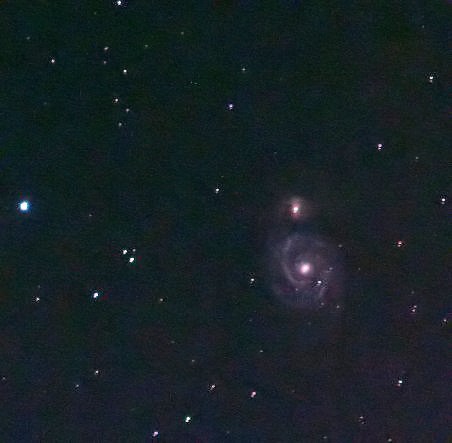
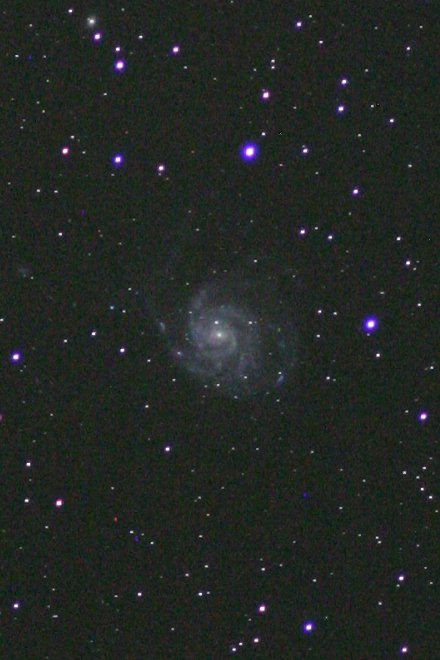
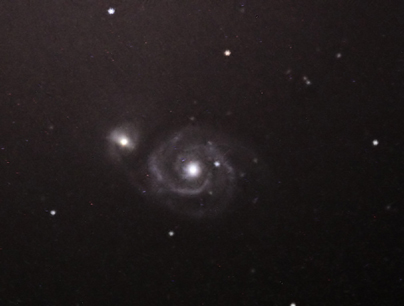
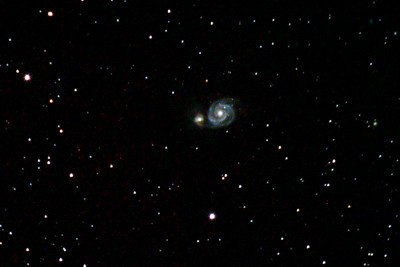
Last night I tried doing some unguided imaging using my 400mm telephoto camera lens instead of my usual imaging through my scope – the following are some of the results.
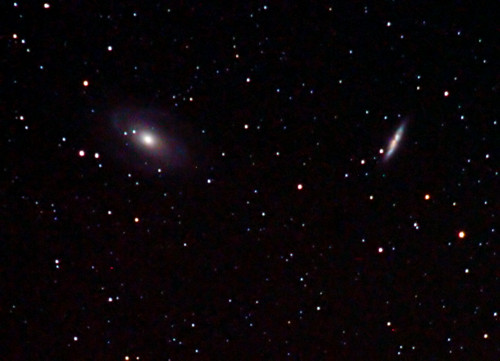
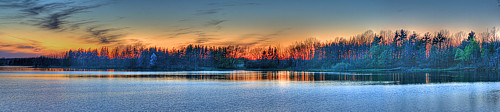
Update By KerryLH :
It was a blast observing with everyone last night. The company of such enthusiastic people made the night so enjoyable. Are other astronomy clubs like this? Anyway I planned on doing some imaging but never got around to it. I was really enjoying comparing the views of many faint fuzzies in the different scopes. I saw M83 in Glenn and Gail’s scope but couldn’t find it in mine. My GOTO alignment was off for the low southern sky. I searched a little with the aid of my Rigel Quickfinder but was quickly drawn away to viewing another object. Later in the night we were viewing the Ring Nebula, Jupiter and other rising objects. I came to the conclusion that I LOVE binoviewers. The views through Don’s scope was so much more relaxing and easier on the eye. Not to mention it seemed like I could see more detail. This will be one item to add on the astro shopping list.
Nice widefield images, Tim! …and thanks for helping me with setting up my polar scope.
Don, thanks for the tea! It gave me enough of a jolt to make it through the rest of the night.
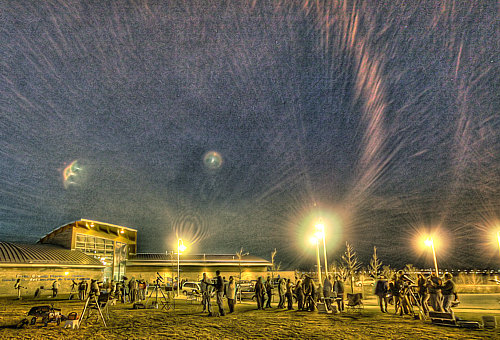
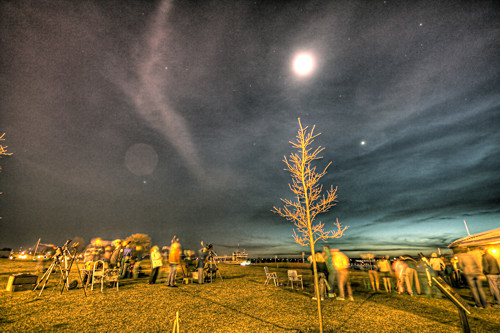
Photo of the group setting up
Steve’s Update:
It was a fine evening to be in Binbrook, except I forgot to dress for 10 degrees cooler than the thermometer. I did have a jacket though, and got by fine.
My experience with the Messier marathon allowed me to zoom in several
objects without much fumbling, which was proof to me that I had definitely come a long way from my first night out.
My binoculars proved valuable to the scouts and their leaders alike.
The parallelogram made it easy for different people to see the same object without a runaround or ladder. The Beehive Cluster definitely answered the question ‘Why do they call it the Beehive Cluster?’.
I heard about a ‘bino box’ and am keen to see one in action. For observing at the zenith, it’s almost impossible to do so comfortably with just a standard mount.
I could zoom in M13, Jupiter, Saturn (a yellowish dot, not round) and M81-82 and M65-66. The Pocket Sky Atlas helped confirm the view was right even if the objects were not obvious in the eyepiece.
Of course, the best part was checking out the views in all the other scopes, as items were found and advertized.
Also very interesting was watching the setup and takedown of the scopes, which will help me decide what kind to buy. In particular, the alignment process. The above remarks about alignment underline the need to give the scope every advantage in the process.
I definitely need a bit more than super binos because a lot of objects end up being pretty tiny at 15x magnification.
However, I will lose light if I don’t increase aperture… so I am wondering. I would also like to try some imaging now that i have seen what can be done and the fine results that are obtained.
I was definitely encouraged by the warm friendliness of all the members present and their breadth of knowledge on the equipment and techniques. ‘Worth the drive to Binbrook’ — or anywhere else. They also planted the idea of going to Starfest this year. I’ll be there if it’s anything like Saturday night. Thanks, HAA.